

Related products



Retatrutide 10MG is an investigational peptide examined for its ability to activate GLP-1, GIP, and glucagon receptors simultaneously. This triple-receptor profile makes it a key molecule for studying complex endocrine feedback systems, metabolic signaling networks, and energy-regulation pathways.
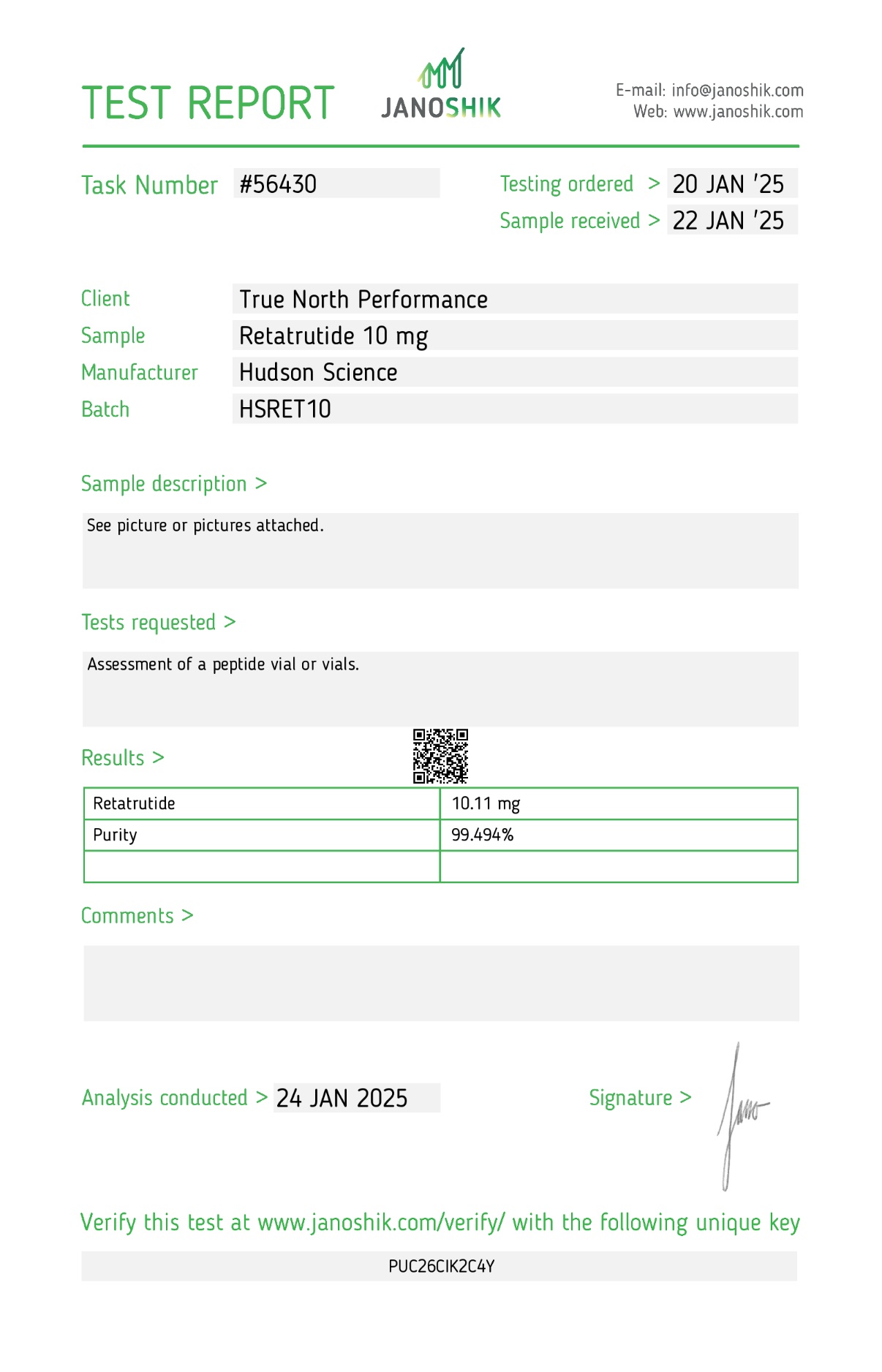
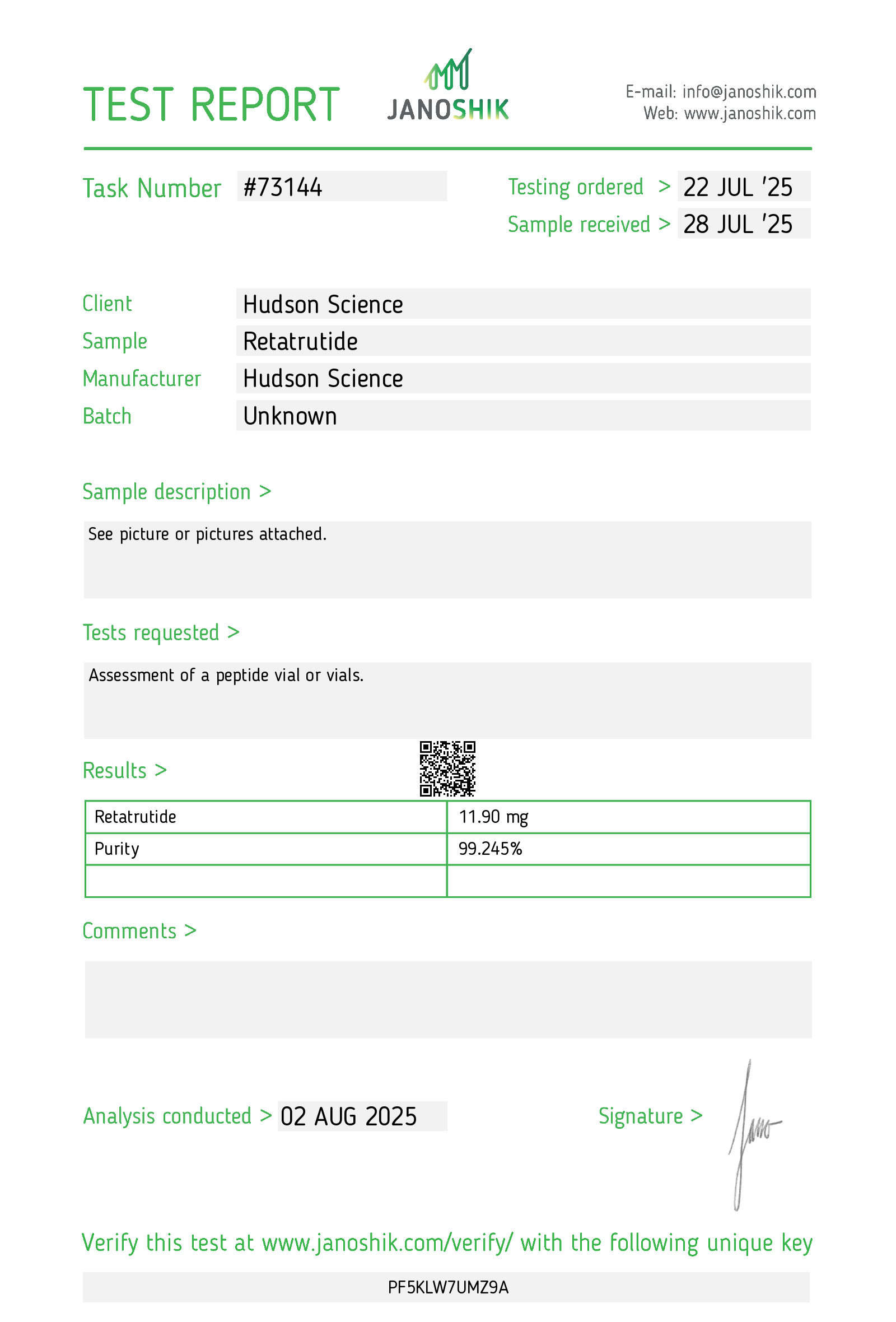
Each vial provides 10MG of lyophilized Retatrutide at >99% purity, produced under sterile, research-grade conditions within the Hudson Science Premier Peptide Line. Every batch undergoes independent third-party verification to confirm molecular identity, peptide integrity, and consistency, ensuring suitability for extended or multi-phase experimental designs.
In non-clinical research settings, Retatrutide is used to explore incretin–glucagon interactions, nutrient-sensing pathways, and hormonal feedback mechanisms involved in energy balance. Its multi-receptor activation enables investigators to examine coordinated peptide signaling beyond what single-pathway analogs offer. The peptide is also compared with compounds like semaglutide and tirzepatide to assess differences in receptor selectivity and metabolic pathway engagement.
Overview of Retatrutide Peptide

Retatrutide is one of the most advanced metabolic peptides currently in clinical development, earning global attention for its unprecedented impact on weight reduction, metabolic control, and fat oxidation. Known as a triple agonist, the retatrutide peptide stimulates GLP-1, GIP, and glucagon receptors simultaneously—something no approved therapeutic currently does. This triple-pathway mechanism distinguishes retatrutide from existing obesity drugs such as semaglutide (Wegovy/Ozempic) or tirzepatide (Mounjaro/Zepbound), which only activate one or two pathways. Retatrutide’s ability to produce combined effects across appetite, insulin sensitivity, and metabolic output positions it as the next potential breakthrough in obesity treatment.
Early data shows retatrutide delivering larger percentage weight reductions than any previous metabolic drug in a clinical setting. Many trials have observed participants losing more weight than those on dual-agonist therapies, highlighting retatrutide as a new class of metabolic modulation. Interest in retatrutide UK research is rising rapidly due to high obesity rates, lack of access to weight-loss medicines, and increasing NHS scrutiny of GLP-1 shortages. Although retatrutide is still investigational, the anticipation around its approval remains strong.
Given its unique pharmacological design, retatrutide influences appetite reduction, delayed gastric emptying, glucose regulation, and increased energy expenditure. This multi-layered effect is crucial for long-term weight management, as it helps overcome the body’s natural resistance to fat loss. Unlike single-pathway peptides, retatrutide aims to control multiple metabolic triggers at once, creating more sustainable shifts in hunger, cravings, nutrient use, and basal metabolic rate.
The retatrutide peptide represents a new frontier in metabolic science, not only for obesity but also for insulin resistance, fatty liver disease, cardiovascular risk, and type 2 diabetes complications. Though the drug is not available for purchase or prescription yet, medical professionals expect retatrutide to reshape obesity treatment once regulatory approval is complete.
How Retatrutide Works (Retatrutide Peptide Mechanism)
Retatrutide’s primary strength lies in its ability to activate three powerful metabolic receptors. Each receptor plays a different role in weight management and energy balance, but when combined, they produce synergistic metabolic outcomes. This 3-in-1 approach differentiates retatrutide from existing obesity drugs, and explains why many researchers believe it will outperform today’s GLP-1-dominant therapies.
GLP-1 Activation and Appetite Suppression (Retatrutide Peptide Pathway 1)
One of the most well-known weight-loss mechanisms is GLP-1 receptor activation. Retatrutide engages this receptor in the same way semaglutide and tirzepatide do. Benefits include:
- reduced appetite
- slower gastric emptying
- improved satiety after meals
- decreased cravings for sugary and high-fat foods
- lower blood sugar spikes
The GLP-1 effect is fundamental to nearly every modern metabolic drug, but retatrutide does not stop at this single pathway.
GIP Activation for Insulin and Nutrient Efficiency (Retatrutide Peptide Pathway 2)
GIP (glucose-dependent insulinotropic polypeptide) plays a major role in regulating insulin response, nutrient partitioning, and post-meal metabolism. Retatrutide’s activation of GIP receptors enhances insulin sensitivity and improves the body’s ability to store nutrients in a more balanced way. When combined with GLP-1 action, GIP helps reduce overall calorie intake while improving metabolic flexibility. This dual synergy is already proven effective in tirzepatide, but retatrutide takes it further.
Glucagon Activation for Fat Burning and Metabolic Output (Retatrutide Peptide Pathway 3)
The most revolutionary aspect of retatrutide is its controlled activation of glucagon receptors. Although glucagon typically raises blood sugar, in the presence of GLP-1 and GIP, the response becomes more balanced, leading to:
- increased energy expenditure
- enhanced fat oxidation
- greater metabolic burn at rest
- reduction in liver fat
- prevention of metabolic slowdown during weight loss
This combination makes retatrutide particularly effective for individuals who typically plateau on GLP-1 drugs due to metabolic adaptation.
Why This Triple-Pathway Combo Produces Exceptional Weight Loss
Retatrutide simultaneously reduces calorie intake AND increases calorie burn. This dual-pressure effect overcomes the body’s natural defense mechanisms that resist long-term weight loss. It is why the retatrutide peptide has shown record-breaking fat-loss data in clinical trials—something no single or dual agonist drug has matched yet.
Retatrutide UK (Access, Regulations, and Public Demand)
Demand for retatrutide UK access has surged as awareness spreads about its effectiveness in clinical trials. Many UK residents are searching for next-generation obesity treatments due to limited access to GLP-1 medications like Wegovy, ongoing NHS shortages, and strict patient eligibility criteria. As a result, UK users are increasingly searching for information regarding retatrutide’s approval timeline, safety profile, and potential availability through private weight-loss clinics.
Regulatory Status in the UK
As of now, retatrutide is still in clinical trials and is not approved for use in the UK. It is therefore unavailable through:
- NHS prescriptions
- UK private clinics
- pharmacies
- peptide retail sites
- online medical providers
Any website advertising retatrutide for sale in the UK is illegitimate, since no consumer version exists internationally—not even in the United States.
Why Retatrutide Interest Is Exploding in the UK
Retatrutide UK search traffic is skyrocketing due to:
- unprecedented trial data showing extreme weight loss
- comparisons suggesting retatrutide may outperform semaglutide
- frustration with limited access to Wegovy or Zepbound
- increasing obesity rates across the UK
- rising popularity of metabolic peptides in gyms and online communities
- the perception that retatrutide represents the “next evolution” of fat-loss drugs
Public expectation is high, and many expect retatrutide to become the most demanded obesity drug in the UK once it receives regulatory approval.
Projected Timeline for Retatrutide in the UK
Approval timing depends on the outcomes of Phase III trials. Once complete, the drug will undergo regulatory review by the MHRA. If approved, retatrutide could appear in the UK through:
- NHS weight-management pathways
- private obesity clinics
- metabolic-medicine specialists
Realistic timelines predict UK availability 1–3 years after worldwide approval, depending on supply chain and pricing negotiations.
Retatrutide Peptide Design (What Makes It Different?)
The retatrutide peptide represents the first fully realized triple-agonist metabolic drug in advanced human trials. Scientists engineered the peptide to blend hormonal pathways that traditionally function independently or in opposition. Its design gives it several distinct advantages over previous obesity drugs.
Extended Half-Life for Weekly Dosing
Retatrutide is structured to maintain consistent metabolic effects through once-weekly injections. This extended half-life ensures stable receptor activation throughout the week, helping minimize appetite fluctuations and energy-level swings.
Synergistic Hormone Engineering
The most unique property of the retatrutide peptide is its balanced receptor affinity across three targets. Instead of overwhelming one pathway, retatrutide distributes activity in a calculated ratio designed to maximize fat loss without pushing blood sugar too high or too low.
Engineered for Severe Obesity and Complex Metabolic Disorders
Retatrutide’s triple-agonist model is intended to help individuals with strong metabolic resistance, such as those who:
- plateau on semaglutide
- struggle with long-term weight maintenance
- experience rapid metabolic slowdown during dieting
- have severe insulin resistance or fatty liver issues
Potential Beyond Weight Management
Ongoing studies are exploring retatrutide’s ability to improve:
- insulin sensitivity
- liver-fat clearance
- cardiovascular risk markers
- inflammatory markers
- stabilization of long-term metabolic function
These features suggest retatrutide may evolve into a broader therapeutic option than current GLP-1 drugs.
Retatrutide How to Get (Legal Pathways Only)
Here is the ONLY correct and legal answer to retatrutide how to get:
You can only access retatrutide through participation in approved clinical trials.
There is no alternative.
>There are no licensed peptide providers offering it.
ata-start=”9690″ data-end=”9693″ />>There are no private clinics distributing it.
Clinical Trial Participation
To legally receive retatrutide before approval, individuals must qualify for ongoing research trials run by:
- university medical centers
- metabolic research organizations
- pharmaceutical partners
Eligibility requirements include:
- BMI thresholds
- health screening
- metabolic assessments
- controlled monitoring
Why You Buy Retatrutide from our Store Swsssarms
Retatrutide is not approved for Human USE. you can buy Retatrutoide for research purpose. you can order for our store. we deliveer in UK and Europe:
Future UK Access (Projected)
When retatrutide becomes approved, UK pathways may include:
- NHS weight-management programs
- private obesity clinics
- licensed prescribers
- endocrinology consultants
But until approval is granted, the only legitimate method remains clinical research trial enrollment.